

How to Build a Cybersecurity Policy for your Business
Why It Is Important to Build a Cybersecurity Policy
A well-structured Cybersecurity Policy is a critical tool for organizations to protect their data, systems, and reputation. It establishes clear rules, procedures, and roles that help minimize risks, ensure compliance, and foster a culture of security awareness across the organization.
What is a Cybersecurity Policy?
A cybersecurity policy is a comprehensive framework that outlines an organization’s approach to safeguarding its information systems, sensitive data, and digital resources from a wide range of cyber threats, including malware, phishing attacks, data breaches, and insider threats. It serves as the blueprint for an organization’s defense strategies, detailing the standards, protocols, and behaviors that both employees and the company must adopt to protect their technology infrastructure and ensure data privacy and security.
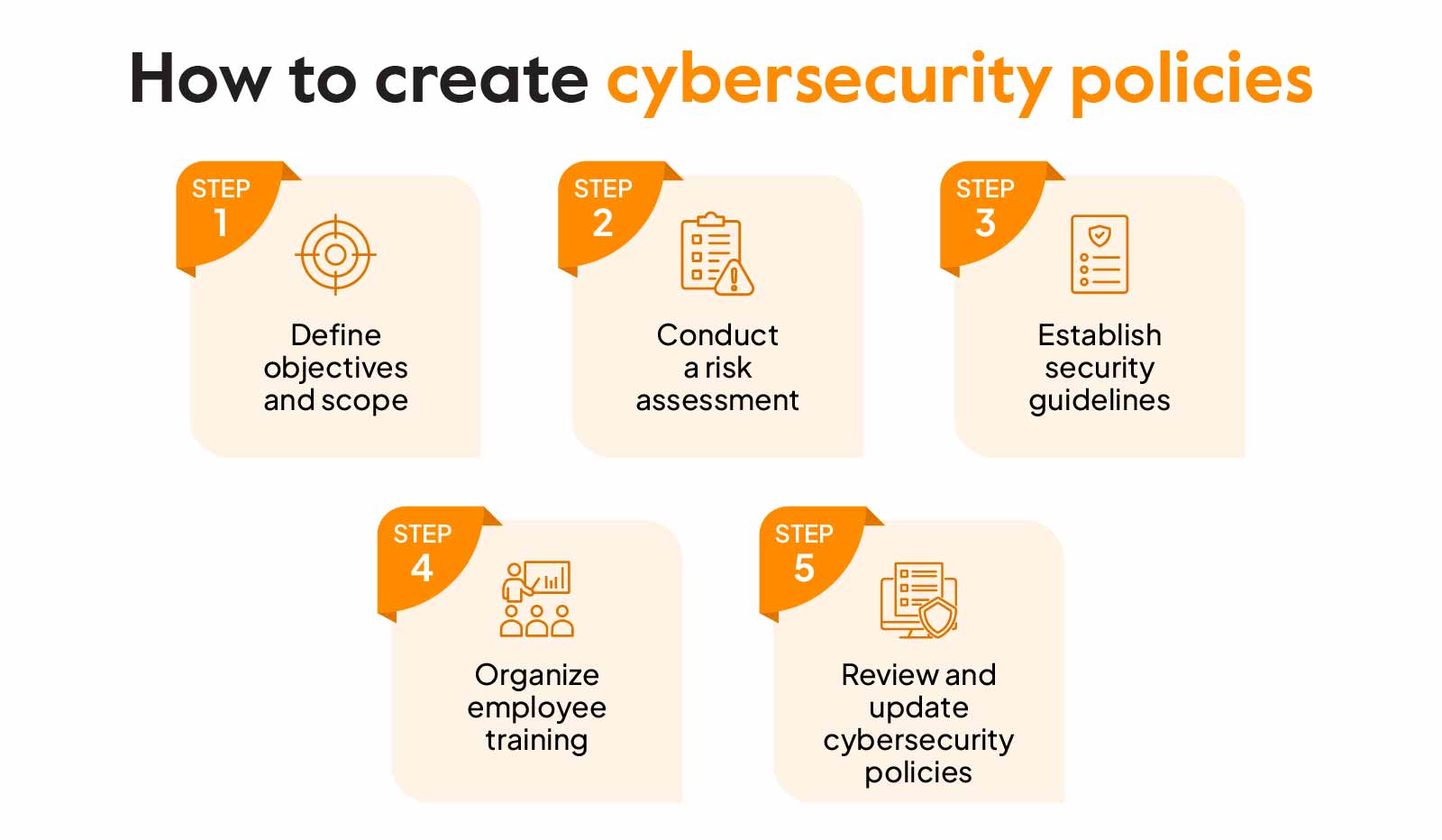
What are the Benefits of a Cybersecurity Policy?
1. Protection of Sensitive Data
A cybersecurity policy helps safeguard sensitive data such as customer information, financial records, intellectual property, and employee details. Data breaches can lead to severe financial losses, reputational damage, and legal penalties, especially when handling personally identifiable information (PII) or payment card data. A well-defined policy outlines how data is classified, stored, shared, and protected, reducing the risk of unauthorized access.
2. Compliance with Legal and Regulatory Requirements
Many industries are governed by strict regulations such as GDPR, HIPAA, PCI-DSS, and others, which require organizations to implement specific security measures. Failure to comply with these standards can lead to significant fines and legal action. A cybersecurity policy ensures your organization meets these regulatory requirements by defining practices that align with legal expectations.
3. Minimization of Cybersecurity Risks
Cyber threats, such as phishing attacks, ransomware, malware, and insider threats, continue to evolve in complexity. A cybersecurity policy helps mitigate these risks by establishing rules for preventing, detecting, and responding to security incidents. It sets the standard for implementing firewalls, antivirus software, secure email practices, and incident response procedures.
4. Employee Awareness and Training
Human error is often a key factor in security breaches. A cybersecurity policy clearly defines the responsibilities of employees regarding the use of technology, handling sensitive information, and reporting security incidents. It establishes mandatory training programs to educate employees on recognizing phishing attacks, securing their devices, and adhering to password policies, significantly reducing the likelihood of breaches caused by human error.
5. Establishing Incident Response Procedures
A well-structured cybersecurity policy outlines an incident response plan, detailing what actions need to be taken when a security incident occurs. This minimizes downtime and ensures swift recovery from cyberattacks. By having a clear set of procedures for detecting, reporting, and responding to breaches, organizations can limit the damage and recover faster.
6. Protection Against Financial Loss
Cyberattacks can lead to financial losses through theft, disruption of services, and recovery costs. In many cases, organizations are forced to pay ransoms, lose revenue due to downtime, or face lawsuits following a data breach. A comprehensive cybersecurity policy protects against such financial losses by establishing proactive defenses and strategies for responding to potential threats.
7. Safeguarding Reputation
Trust is one of the most valuable assets for any business. A security breach can severely damage an organization’s reputation, leading to loss of customers, partnerships, and market share. A robust cybersecurity policy helps prevent breaches and ensures that your organization is viewed as a responsible and secure entity, safeguarding your reputation.
8. Consistent Security Practices
Without a formal cybersecurity policy, there may be inconsistencies in how security measures are applied across the organization. Employees and departments may adopt different practices, leading to gaps in protection. A well-crafted policy ensures that everyone follows the same guidelines, maintaining a consistent level of security across all areas of the business.
9. Support for Business Growth
As businesses grow and adopt new technologies, the attack surface for cyber threats also expands. A cybersecurity policy adapts to these changes by setting out the necessary security measures for new tools, cloud services, mobile devices, and remote work environments. It ensures that growth does not come at the expense of security and that new initiatives are safe from cyber threats.
10. Clarity in Roles and Responsibilities
A cybersecurity policy defines the roles and responsibilities of various teams and individuals within the organization. This clarity ensures that everyone understands who is responsible for what in terms of security, from the IT department to the legal team to individual employees. When a cyber incident occurs, there’s no confusion about who needs to take action and what steps to follow.
11. Facilitation of Audits and Assessments
Cybersecurity audits and assessments are essential for identifying vulnerabilities and ensuring compliance with industry standards. A cybersecurity policy helps by outlining the procedures and controls in place, making it easier for auditors to evaluate your security posture. Regular assessments also ensure that your organization stays ahead of emerging threats and maintains compliance with regulations.
What are the Key Components of a Cybersecurity Policy?
- Governance and Oversight: The policy should specify who within the organization is responsible for implementing and overseeing cybersecurity efforts. This typically includes IT leadership, security officers, and a cybersecurity team, with roles and responsibilities clearly outlined. The policy should also be backed by the organization’s leadership, ensuring it is enforced from the top down.
- Password and Access Management: Establishing rules for password creation, storage, and updating is fundamental in protecting systems from unauthorized access. A cybersecurity policy will outline best practices for secure passwords, use of multi-factor authentication (MFA), and access control measures to limit user permissions based on their role within the company.
- Data Handling and Encryption: The policy defines how sensitive data should be handled, both in transit and at rest. It will often specify encryption standards for protecting information such as personal identifiers, financial records, and proprietary business data. Data loss prevention (DLP) strategies and rules for secure data disposal also fall under this section.
- Device and Network Security: With the growing prevalence of remote work and mobile device usage, the policy will address security protocols for all devices connected to the organization’s network. This includes laptops, smartphones, and tablets, as well as guidelines for using VPNs, firewalls, and endpoint security solutions to protect the network and prevent unauthorized access.
- Software and Patch Management: A crucial aspect of cybersecurity is keeping software up to date. The policy will define a process for regular software updates and patches to fix security vulnerabilities, as well as approved software and applications for use within the organization.
- Training and Awareness Programs: Employees are often the weakest link in an organization’s security posture, making training a critical component of the policy. Regular training sessions and awareness programs ensure that employees can recognize common cyber threats, such as phishing attempts, and understand the importance of following security protocols. This section of the policy encourages ongoing education and vigilance across the organization.
- Incident Reporting and Response Procedures: A well-defined incident response plan is crucial to minimize the damage caused by cyberattacks or data breaches. The cybersecurity policy will include instructions on how to report an incident, the roles involved in incident management, steps to contain the breach, and protocols for restoring normal operations. The policy will also address communication plans, both internally and with affected external parties.
- Vendor and Third-Party Security: The policy extends beyond internal systems and data, covering the security standards that vendors and third-party partners must adhere to. This is especially important when sensitive data is shared with external parties. The policy will outline procedures for vetting third-party security practices and establishing secure communication channels.
- Monitoring and Auditing: To ensure continuous protection, the policy will also establish protocols for monitoring network traffic, user activity, and potential vulnerabilities. It will define auditing procedures to evaluate the organization’s compliance with the policy, helping to identify areas for improvement and ensure ongoing alignment with security objectives.
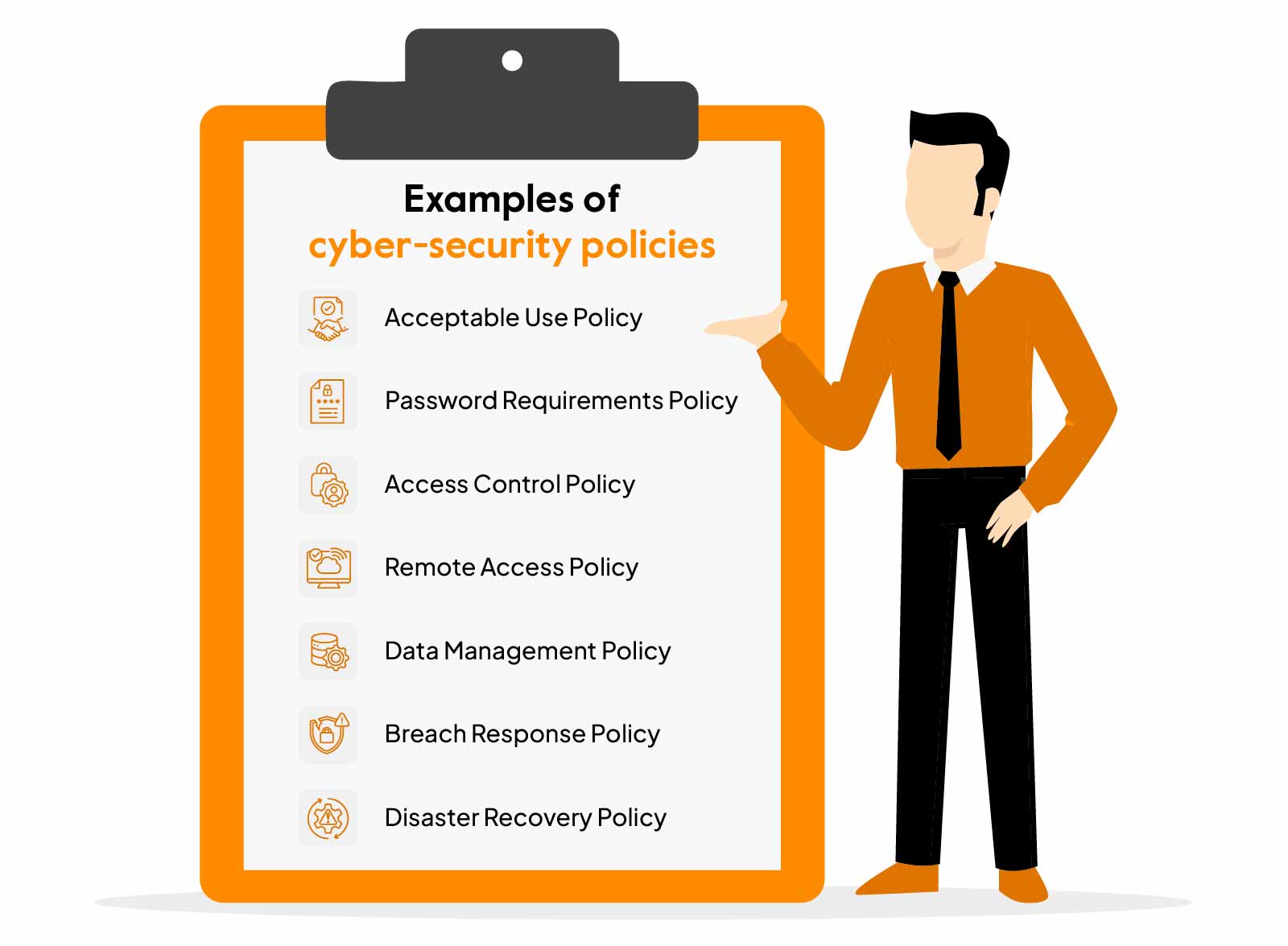
How DAG Tech Can Help You Build and Implement a Cybersecurity Policy
Developing and implementing an appropriate Cybersecurity Policy can feel overwhelming, but this is where DAG Tech steps in. With years of experience in policy development and enforcement, DAG Tech has a proven process to help businesses create and execute effective policies.

Here’s how DAG Tech can support you:
- Tailored Policy Creation: DAG Tech works closely with your team to create a policy that fits your specific business needs. We understand that no two businesses are alike, so we design policies that are unique to your operational requirements.
- Risk and Impact Analysis: Our expert team will conduct a thorough risk and impact analysis to ensure all potential threats to your business are identified. From there, we create a strategic plan that minimizes these risks.
- Comprehensive Testing and Training: Once the policy is created, DAG Tech doesn’t just leave you with a document. We work with you to test the policy through real-world simulations and train your team on what to do in the event of a disruption.
- Continuous Monitoring and Updates: A policy is not a “set it and forget it” plan. As your business evolves, your policy needs to adapt. DAG Tech provides ongoing monitoring and periodic updates to ensure your policy remains effective as technology and risks change.
- End-to-End Implementation: DAG Tech handles the entire implementation process, from initial consultation and design to testing, training, and final execution. We ensure your business is fully prepared to tackle disruptions head-on.

DAG Tech’s CxO program offers businesses direct access to top-level IT subject matter experts (SME) who work closely with your team. Whether your organization lacks an in-house expertise or you simply need outsourced advice, DAG Tech fills that gap.
Tailored Expertise: Customized strategies suited to your business’s specific needs
Strategic Guidance: Proactive advice on technological innovations, compliance and cybersecurity
Ongoing Partnership: DAG Tech’s experts stay with you throughout implementation and beyond
