Skip to content
Illustration of a stylized purple gear partially transformed into circuit lines, with three green circles at the end. The design symbolizes a blend of mechanical and digital concepts, reflecting the seamless integration found in modern IT services.

How to Build a Digital Transformation Plan for your business

Build a winning Digital Transformation Plan

What is a Digital Transformation Plan?

A digital transformation plan is a strategic roadmap that outlines how an organization will integrate and utilize digital technologies to fundamentally change how it operates, delivers value to customers, and competes in the market. It involves leveraging technology to optimize processes, enhance customer experiences, foster innovation, and create new business models. The plan includes goals, initiatives, and steps for implementing technologies like cloud computing, AI, data analytics, automation, with a focus on improving efficiency, flexibility, and competitiveness.

All You Need Know About Digital Transformation Solutions

What are the Benefits of a Digital Transformation Plan?

1. Improved Efficiency and Productivity

One of the most immediate benefits of a digital transformation plan is the optimization of business processes. By integrating automation, artificial intelligence (AI), and cloud-based tools, organizations can reduce manual tasks, streamline workflows, and improve operational efficiency. For example:

  • Automation: Digital tools can automate repetitive tasks, such as data entry, reporting, and customer support, freeing up employees to focus on more strategic initiatives.
  • Faster Decision-Making: With real-time data analytics and integrated systems, decision-making becomes quicker and more accurate, allowing businesses to respond swiftly to market changes.

2. Enhanced Customer Experience

Digital transformation allows businesses to meet the ever-evolving expectations of customers by providing more personalized, efficient, and seamless interactions. Some examples include:

  • Personalization: Using customer data, organizations can tailor products, services, and communications to individual needs, improving satisfaction and loyalty.
  • Omnichannel Experience: Digital platforms enable businesses to engage with customers across multiple channels (web, mobile, social media) and provide a consistent experience regardless of where interactions take place.
  • 24/7 Availability: Technologies like chatbots and AI-driven customer service ensure that customers can access support and services at any time, improving overall convenience.

3. Increased Agility and Flexibility

A digital transformation plan helps organizations become more adaptable to change. By adopting flexible technologies and processes, businesses can quickly respond to market trends, technological advancements, and customer demands. Key aspects of increased agility include:

  • Scalability: Cloud solutions allow businesses to scale operations up or down based on demand without the need for significant infrastructure investments.
  • Remote Work: Digital tools enable remote work capabilities, allowing employees to collaborate and stay productive from anywhere, which is particularly valuable in today’s hybrid work environments.
  • Innovation: Digital transformation fosters a culture of innovation by encouraging the use of cutting-edge technologies like AI, IoT, and blockchain to create new products or services and enter new markets.

4. Better Data-Driven Decision Making

A digital transformation plan equips organizations with the tools and strategies to harness the power of data. With real-time access to business intelligence and data analytics, companies can make informed, evidence-based decisions. Benefits include:

  • Informed Strategy: Analytics platforms provide valuable insights into customer behavior, market trends, and internal performance, allowing companies to refine strategies for growth.
  • Predictive Capabilities: Advanced analytics can help organizations predict market trends and customer preferences, leading to more proactive decision-making.
  • Data-Driven Culture: With access to meaningful data, employees across departments can make smarter, faster decisions that are aligned with company goals.

5. Cost Savings

While digital transformation requires upfront investment in technology and training, the long-term cost savings can be significant. Automation, cloud solutions, and streamlined processes can all contribute to reducing operating expenses. Key areas where cost savings occur include:

  • Reduced Infrastructure Costs: Cloud-based services reduce the need for expensive physical infrastructure and maintenance costs.
  • Efficiency Gains: Automated processes lower operational costs by reducing the time and resources required to complete tasks.
  • Better Resource Allocation: By optimizing workflows and improving productivity, businesses can allocate resources more effectively, focusing on high-value areas.

6. Stronger Security and Compliance

Digital transformation often involves adopting modern cybersecurity measures and compliance frameworks. Organizations can strengthen their defenses against cyber threats while ensuring compliance with regulations such as GDPR, HIPAA, and CCPA. Benefits include:

  • Improved Cybersecurity: Digital solutions allow for the implementation of advanced security protocols, such as multi-factor authentication (MFA), encryption, and continuous monitoring.
  • Regulatory Compliance: Many industries are subject to strict regulations regarding data privacy and security. Digital tools ensure compliance with these regulations, avoiding costly fines and protecting an organization’s reputation.
  • Business Continuity: A solid digital infrastructure ensures that an organization is prepared to handle unexpected disruptions (such as natural disasters or cyberattacks), with backup systems in place to maintain operations.

7. Enhanced Collaboration and Communication

Digital transformation enables better collaboration within teams and across departments. Cloud-based tools, communication platforms, and project management software make it easier for employees to work together efficiently, even if they are located in different parts of the world. Some specific benefits include:

  • Unified Platforms: Collaboration tools like Microsoft Teams, Slack, or Zoom create a unified workspace where employees can communicate, share documents, and manage projects in real time.
  • Cross-Department Collaboration: Digital transformation breaks down silos, enabling teams from different departments (e.g., marketing, sales, IT) to collaborate more effectively on projects and initiatives.
  • Knowledge Sharing: Digital platforms make it easier to store, access, and share knowledge and resources, creating a more informed and capable workforce.

8. Competitive Advantage

In today’s digital world, companies that fail to embrace digital transformation risk falling behind their competitors. A digital transformation plan allows organizations to:

  • Stay Ahead of Competitors: Companies that invest in digital technologies can outpace competitors who rely on outdated systems and processes, gaining an edge in areas like customer service, product development, and operational efficiency.
  • Foster Innovation: Digital transformation encourages a forward-thinking culture that is constantly looking for ways to improve, leading to new innovations and business models.
  • Adapt to Industry Disruptions: With digital transformation, businesses can quickly pivot and adapt to disruptive changes in their industries, staying relevant and successful even in times of uncertainty.

9. Employee Empowerment and Satisfaction

Digital transformation often involves providing employees with better tools and resources to do their jobs more effectively. When employees are equipped with modern technologies, their job satisfaction and productivity levels increase. Benefits include:

  • Empowered Workforce: Access to the latest tools and technology empowers employees to be more productive and creative in their roles.
  • Reduced Frustration: Eliminating outdated, inefficient processes improves employee morale, as they can focus on meaningful tasks rather than dealing with unnecessary obstacles.
  • Skills Development: Digital transformation often comes with training and development opportunities, enabling employees to enhance their digital literacy and stay competitive in their careers.

How to Plan for a Successful Digital Transformation

What are the Key Components of a Digital Transformation Plan?

  • Vision and Objectives: Clearly define the goals of the transformation. What does the organization aim to achieve—better customer service, increased efficiency, new revenue streams, or enhanced operational agility? The vision should align with the organization’s broader business goals.
  • Technology Adoption: Identify the key technologies that will drive the transformation. This could include cloud solutions, artificial intelligence (AI), big data, automation, Internet of Things (IoT), or advanced analytics. The plan outlines which technologies will be implemented and how they will benefit the organization.
  • Process Redesign: Digital transformation isn’t just about technology; it requires rethinking and optimizing business processes. The plan should identify outdated processes that can be streamlined or automated through digital solutions, leading to faster and more efficient workflows.
  • Cultural and Organizational Change: A successful digital transformation requires buy-in from all levels of the organization. The plan should address how to foster a digital-first mindset among employees and executives, promote innovation, and encourage the adoption of new tools and systems.
  • Customer Experience Focus: Improving customer experience is often a core part of digital transformation. The plan should detail how technology will enhance interactions with customers, personalize services, and meet evolving customer demands.
  • Data Strategy: Data is a crucial asset in digital transformation. The plan should cover how the organization will leverage data for decision-making, insights, and creating value. This includes data collection, storage, security, and analytics.
  • Change Management and Training: A strong digital transformation plan addresses the need for change management. Employees must be trained to use new tools, understand new processes, and adapt to the cultural shift. This part of the plan ensures that the workforce is prepared and supported throughout the transition.
  • Metrics and Monitoring: Define clear metrics for success and key performance indicators (KPIs) to track the progress of the transformation. The plan should include mechanisms for monitoring and adjusting the strategy as needed to ensure continuous improvement and alignment with objectives.

Digital transformation - Free technology icons

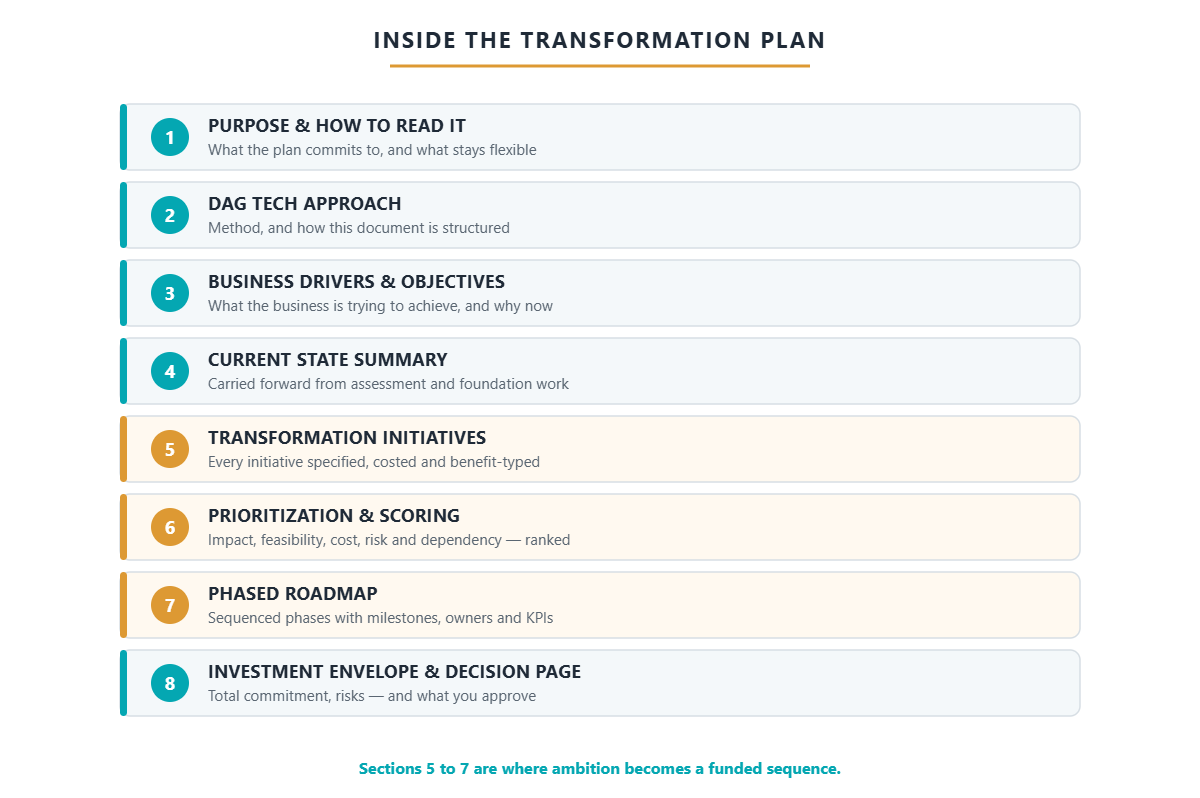
How DAG Tech Can Help You Build and Implement a Digital Transformation Plan

Developing and implementing a Digital Transformation Plan can feel overwhelming, but this is where DAG Tech steps in. With years of experience in leading transformations, DAG Tech has a proven process to help businesses create and execute effective plans.

Here’s how DAG Tech can support you:

  1. Tailored Plan Creation: DAG Tech works closely with your team to create a plan that fits your specific business needs. We understand that no two businesses are alike, so we design policies that are unique to your operational requirements.
  2. Risk and Impact Analysis: Our expert team will conduct a thorough risk and impact analysis to ensure all potential threats to your business are identified. From there, we create a strategic plan that minimizes these risks.
  3. Comprehensive Testing and Training: Once the plan is created, DAG Tech doesn’t just leave you with a document. We work with you to test the policy through real-world simulations and train your team on what to do in the event of a disruption.
  4. Continuous Monitoring and Updates: As your business evolves, your plan needs to adapt. DAG Tech provides ongoing monitoring and periodic updates to ensure your plan remains effective as technology and opportunities change.
  5. End-to-End Implementation: DAG Tech handles the entire transformation process, from initial consultation and design to projects, migrations, and support.

A stylized logo featuring the letters C and O in gradient blue and purple with a large X intersecting between them, echoing themes of IT support. The design incorporates circular and diagonal elements, presenting a modern and dynamic appearance.

DAG Tech’s CxO program offers businesses direct access to top-level IT subject matter experts (SME) who work closely with your team. Whether your organization lacks an in-house expertise or you simply need outsourced advice, DAG Tech fills that gap.

Tailored Expertise: Customized strategies suited to your business’s specific needs

Strategic Guidance: Proactive advice on technological innovations, compliance and cybersecurity

Ongoing Partnership: DAG Tech’s experts stay with you throughout implementation and beyond

A round icon featuring a gray circle with a white check mark at its center signifies REQUEST SERVICE in bold white text. It is enveloped by a green border, ideal for emphasizing IT services or support.

Back To Top
Search