

How to Select a Great IT Service Level Agreement
How to Select a Great IT Service Level Agreement
IT Service Level Agreements (SLAs) are formal contracts between a Managed Service Provider (MSP) and a client. SLAs outline the specific services to be provided, the performance standards (Key Performance Indicators, or KPIs) expected, and the consequences for failing to meet those standards. SLAs act as the backbone of any outsourced IT support relationship, establishing clear expectations for both parties and ensuring accountability.
Why Are SLAs Critical in Outsourced IT Services?
IT Support SLAs are essential because they create a mutual understanding between the business and the IT service provider about what is expected. Without an SLA, there can be confusion about the scope of services, response times, or resolution times, leading to dissatisfaction and potentially business disruption. By clearly defining KPIs, SLAs provide measurable metrics to track the performance and efficiency of the service provider.
New York businesses can see the SLA terms behind our NYC IT support plans.

Key Components of an IT Service Level Agreement
- Service Scope: The SLA defines the specific services the IT company will provide. This could include helpdesk support, network monitoring, cloud management, cybersecurity, data backup, disaster recovery, and more. Clearly defining the scope ensures both parties understand which services are covered and prevents disputes over unfulfilled expectations.
- KPIs (Key Performance Indicators): SLAs outline specific KPIs that the outsourced IT provider must meet. These measurable targets ensure performance is quantified and continuously evaluated. Common IT service KPIs include:
- Response Time: How quickly the service provider acknowledges an issue after it is reported.
- Resolution Time: How long it takes to resolve an issue after it has been identified.
- Uptime: The percentage of time a system or service is operational, often targeting 99.9% uptime.
- System Availability: The agreed level of availability for critical systems and services.
- First Contact Resolution: The percentage of incidents resolved at the first point of contact, without needing escalation.
- Response and Resolution Time Guarantees: One of the most important KPIs in an SLA is the commitment to response and resolution times. For instance, an SLA might specify that the IT provider must respond to critical issues within 15 minutes and resolve them within 2 hours. These guarantees are vital for maintaining business continuity, as delays in resolving IT issues can lead to costly downtime or data loss.
- Uptime and Availability: Many SLAs define uptime guarantees, which ensure that systems or services are available to the client for a specific percentage of time, typically 99.9% or higher. For mission-critical systems, higher uptime guarantees (like 99.99%) may be essential. SLAs provide accountability by compensating the client if the service provider fails to meet the agreed-upon availability levels.
- Support Tiers: SLAs often define the various tiers of support that a business can expect, depending on the severity of an issue. For example:
- Tier 1 might be for minor issues, with a longer response and resolution time.
- Tier 2 might cover more significant issues, requiring faster action.
- Tier 3 could handle critical system failures, demanding immediate attention and resolution.
- Reporting and Metrics: SLAs typically include a clause on regular performance reporting. This ensures transparency and allows the client to monitor how well the service provider is meeting its KPIs. Reports may include data on response times, uptime, system health, and incident resolution rates.
- Penalties for Non-Compliance: To enforce accountability, SLAs often include penalties or service credits if the service provider fails to meet agreed-upon KPIs. For example, if an IT provider fails to meet uptime guarantees or exceeds resolution times, they may be required to provide financial compensation or service credits to the client. This incentivizes the provider to meet or exceed performance targets.
- Escalation Procedures: SLAs typically outline escalation procedures in case a service issue isn’t resolved within the agreed-upon timeframe. This process ensures that higher levels of support or management are involved to address and resolve persistent or critical issues as quickly as possible.
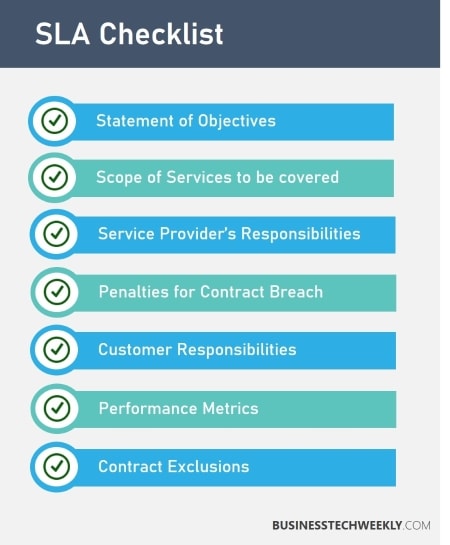
Benefits of Well-Defined Outsourced IT SLA
- Clear Expectations: SLAs eliminate ambiguity by defining the exact responsibilities of the IT provider. Both parties know what services will be delivered and how performance will be measured, reducing the risk of miscommunication or unmet expectations.
- Improved Accountability: By setting specific KPIs and attaching penalties to non-performance, SLAs hold the IT service provider accountable for delivering high-quality services. This drives providers to maintain high standards of service, minimizing downtime and maximizing efficiency.
- Better Business Continuity: When IT services are critical to business operations, delays or disruptions can be costly. SLAs ensure that issues are dealt with promptly, minimizing the impact of IT problems on business continuity.
- Data-Driven Decision Making: Regular reporting on SLAs gives businesses concrete data on the performance of their IT provider. This allows businesses to make informed decisions about whether to continue with their current provider or make adjustments to their IT support strategy.
- Enhanced Customer Satisfaction: With SLAs in place, businesses can feel confident that their IT issues will be resolved quickly and effectively. This leads to a more seamless IT experience, improved productivity, and higher overall satisfaction with the IT provider.
Why You Need the Right IT Support Company
The effectiveness of a MSP SLA depends largely on the capabilities and reliability of the IT support company you choose. Not all IT providers are the same, and selecting a company with the expertise and resources to meet or exceed SLA commitments is crucial.
- Expertise: The right IT support company will have the technical knowledge and experience to not only meet SLA requirements but also anticipate potential issues before they occur. A skilled team can ensure faster response and resolution times, reducing the risk of IT problems affecting your operations.
- Proactive Monitoring: The best IT companies go beyond reactive support. They offer proactive monitoring and maintenance to prevent issues from arising in the first place. This proactive approach helps avoid downtime and keeps systems running smoothly, ensuring that SLA KPIs are consistently met.
- Customizable SLAs: A good IT provider will work with you to tailor SLAs to your specific business needs. They understand that different businesses have different priorities, and they’ll ensure the agreement reflects those needs, whether it’s faster response times for critical issues or higher uptime guarantees for mission-critical systems.
- Comprehensive Services: The right IT support company will offer a range of services beyond basic troubleshooting. They’ll provide full IT management, from cybersecurity to data backups and disaster recovery, ensuring all aspects of your IT infrastructure are covered. This comprehensive support is essential for meeting the diverse needs outlined in an SLA.
- Strong Track Record: It’s important to choose an IT provider with a proven track record of meeting or exceeding their SLAs. Look for testimonials, case studies, or industry certifications that demonstrate their reliability and commitment to excellence.
- Continuous Improvement: A forward-thinking IT support company will continually refine its services to improve performance. This aligns with the SLA’s focus on continuous service improvement, ensuring that your IT systems stay ahead of evolving business and technology demands.
IT Service Level Agreements (SLAs) are a crucial component of any outsourced IT support relationship. They set clear expectations for the performance of the IT provider, define measurable KPIs, and ensure accountability through penalties or service credits. By choosing the right IT support company with the expertise and resources to meet SLA requirements, businesses can ensure that their IT services are reliable, efficient, and aligned with their goals. SLAs not only help businesses maintain continuity and reduce downtime but also drive continuous improvement in IT service delivery, making them an essential tool for growth and success.
Related reading: Modernizing Multi-Site IT · Clarity IT for Retail IT Support · The Evolution of Network Support Services