
IT Service Management (ITSM) Frameworks
What is an ITSM Framework?
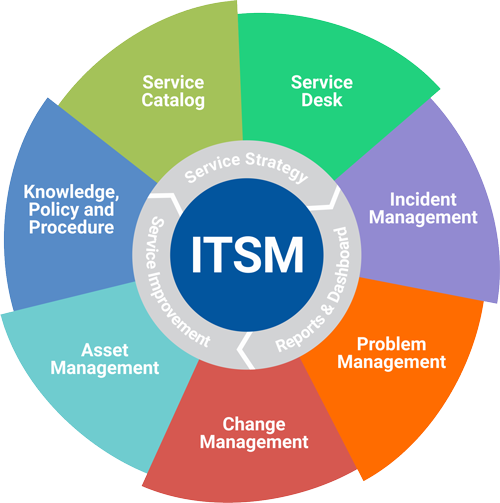
IT Service Management (ITSM) frameworks are structured approaches designed to help organizations effectively deliver and manage their IT services. They provide a comprehensive set of best practices, processes, and guidelines that ensure IT services align with the needs of the business, enhance customer satisfaction, and drive overall efficiency.
Why are ITSM Frameworks Important?
The complexity of modern IT environments can make it challenging to deliver consistent and high-quality services without a standardized approach. ITSM frameworks help businesses streamline their IT processes by offering a proven methodology for managing everything from service requests to incidents, changes, and performance monitoring. They establish a systematic way to manage IT services, ensuring consistency, reliability, and scalability.
By implementing an ITSM framework, organizations can:
- Improve Service Quality: ITSM frameworks focus on ensuring services meet user expectations and business needs, reducing downtime and disruptions.
- Increase Efficiency: By standardizing processes, ITSM frameworks eliminate redundancies, optimize resource allocation, and help IT teams work more efficiently.
- Enhance Customer Satisfaction: When IT services are delivered consistently and issues are resolved quickly, customer satisfaction naturally improves.
- Ensure Compliance: Many industries have strict regulatory requirements for IT service delivery. ITSM frameworks often incorporate compliance with standards like ISO, NIST, and GDPR.
- Enable Continual Improvement: ITSM frameworks encourage a culture of continual improvement by regularly reviewing and optimizing IT services.
What are the Benefits of Implementing ITSM Frameworks?
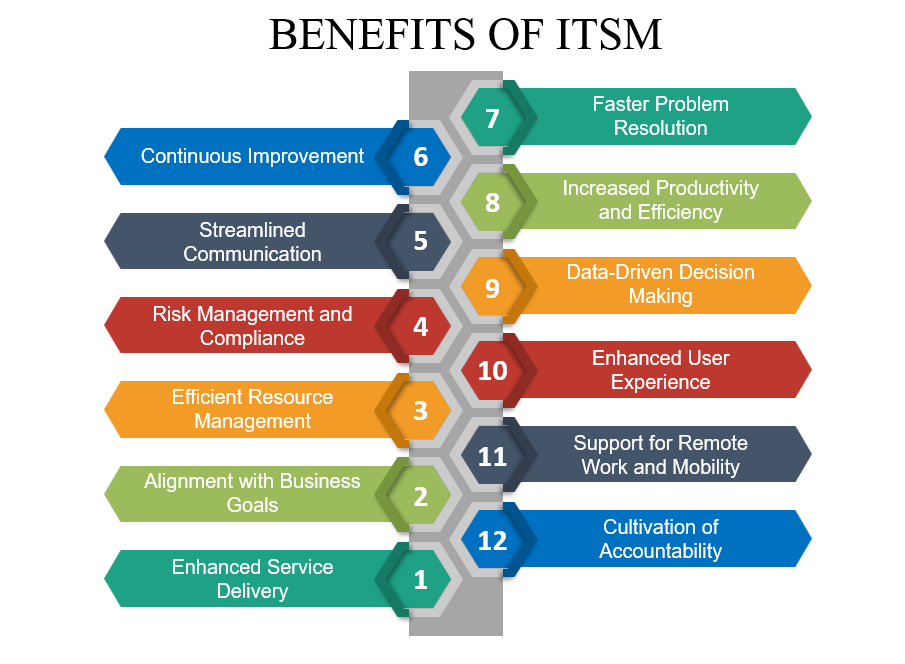
- Reduced Costs: ITSM frameworks help businesses optimize their IT resources, reducing inefficiencies and unnecessary expenditures. By standardizing processes, businesses can avoid costly mistakes and reduce downtime.
- Improved Productivity: Standardized processes make it easier for IT teams to manage services effectively, leading to quicker issue resolution and less time wasted on repetitive tasks.
- Better Risk Management: ITSM frameworks provide structured approaches to managing risks, whether it’s in relation to changes, incidents, or security threats. This helps businesses mitigate potential issues before they escalate into major problems.
- Enhanced Communication: ITSM frameworks improve communication between IT teams and other departments. Clear guidelines and processes make it easier to collaborate and ensure that IT services are meeting the broader needs of the business.
- Alignment with Business Goals: By focusing on the business value of IT services, ITSM frameworks ensure that IT investments are aligned with the organization’s strategic objectives, maximizing the return on those investments.
What are the most common ITSM frameworks?
ITIL
IT Infrastructure Library (ITIL) is a set of guidelines designed to help businesses align their IT services with their overall needs. It provides best practices for managing IT services and focuses on delivering quality services that meet business goals. ITIL has five key stages: service strategy, design, transition, operation, and improvement. These stages help companies improve their IT processes. ITIL is widely used around the world to ensure IT services are effective and meet business objectives.
HDI Support Center Standard
The HDI Support Center Standard gathers best practices from various sources and applies them to support centers or service desks. It’s especially popular in North America, where it’s supported by local HDI chapters and events.
Knowledge-Centered Service (KCS)
KCS is a method for managing knowledge in organizations. Instead of creating knowledge separately, KCS integrates knowledge creation into everyday problem-solving. As teams solve issues, they generate knowledge that can help in the future. This system is widely used in service desks to improve how they capture and manage information.
Microsoft Operations Framework (MOF)
MOF is a free framework that helps businesses align IT with their goals. It covers the entire lifecycle of IT services and aims to improve efficiency and reliability. MOF was developed before cloud computing became mainstream, so while it’s helpful for Microsoft-based IT environments, users should be aware that it’s a bit dated.
ISO 9000
ISO 9000 is a set of standards for quality management. It helps organizations meet customer expectations while following legal requirements. It ensures products and services are consistently high-quality. ISO 9000 is useful for companies that want to improve their processes and maintain consistent quality.
ISO/IEC 20000
ISO/IEC 20000 is an international standard for IT service management. It was created based on ITIL best practices, but it also works with other frameworks like MOF and COBIT. Unlike ITIL, which is a set of guidelines, companies can actually become certified as compliant with ISO/IEC 20000.
Capability Maturity Model Integration (CMMI)
CMMI is a model that helps organizations assess and improve their processes. It measures how mature and optimized an organization’s processes are. CMMI is commonly used by IT teams to evaluate and improve their services over time.
Lean
Lean is a method focused on reducing waste while maintaining productivity. In IT, Lean is used to eliminate unnecessary work and focus on activities that add value to the product or service. It’s often mentioned along with DevOps and Agile methodologies.
Total Quality Management (TQM)
TQM is a management philosophy aimed at long-term success through customer satisfaction. It involves making continuous improvements to ensure high-quality products and services. While it was popular in the past, TQM has largely been replaced by ISO 9000, Lean, and Six Sigma approaches.
Six Sigma
Six Sigma is a method used to improve processes by identifying and eliminating defects. It focuses on reducing variability in processes to improve quality. Lean Six Sigma combines Lean’s focus on waste reduction with Six Sigma’s emphasis on quality improvement.
Kaizen
Kaizen is a Japanese philosophy focused on continuous improvement. It encourages businesses to constantly look for ways to improve every part of their organization, from the IT service desk to sales operations. The goal is to eliminate waste and improve processes through small, consistent changes.
COBIT
COBIT is a framework for IT management and governance created by ISACA. It provides best practices for controlling and managing IT services within an organization. COBIT helps ensure IT is aligned with the business and supports its goals.
Process Maturity Framework (PMF)
PMF is a method used to assess the maturity of an organization’s processes. It works similarly to CMMI but has become less popular in recent years as CMMI has gained more traction.
Conclusion
Whether you’re looking to improve service delivery, reduce downtime, or align IT with business strategy, implementing an ITSM framework is an essential step in building a successful IT infrastructure. By choosing the right framework and following its best practices, businesses can improve customer satisfaction, enhance productivity, and ultimately, grow their bottom line.
Related reading: How To Accomplish Smart Computing Fleet Management · DAG Tech Diamond IT END OF LIFE · Optimizing Network Performance: Key Strategies for Efficient Data Transfer